At first glance, landing a resort destination project seems like a dream come true. The sites are invariably spectacular, and potential buyers are eager to tack on plenty of lucrative options. The build is usually a creative challenge, because those same buyers (retirees and people looking for a vacation home) often want homes that look like they fell from the pages of an architectural magazine.
These projects also tend to be more complex and costly than a conventional community. The sites may be beautiful, but they're often located in pristine settings where environmental regulations and habitat issues can give a developer nightmares. The need to provide amenities, build high-end homes, and meet the expectations of a demanding customer base requires a team of architects, planners, marketers, and habitat specialists, all of whom have to work together seamlessly, like a well-oiled machine. Getting the job done means sweating a variety of small details while never losing sight of the project's vision.
Still interested? We asked some experienced pros to share their approach to one of the toughest projects in the industry. Here are nine keys to building a great residential resort community.
1. STARTWITH A GREAT LOCATIONThe most crucial ingredient needed for a unique resort destination is obvious: a great site. The best sites have a natural beauty that lends itself to innovative design. “We look for places known for incredible beauty that are relatively easy to get to,” says Mark Harmon, CEO of Auberge Resorts in Mill Valley, Calif., which owns resorts in California, South Carolina, and Baja, Mexico. He says that good locations aren't just in undeveloped areas. They include established destinations such as Napa Valley, Calif.; Cabo San Lucas, Mexico; and Aspen, Colo. “Having a spectacular site [no matter where it is] allows us to create something memorable by taking our cues from the land.”

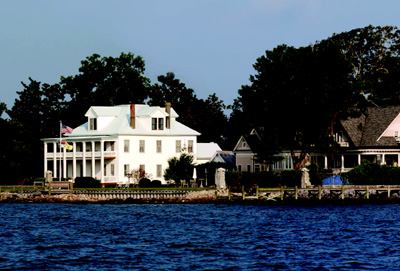
ENDLESS SUMMER: Many resorts are built around the theme of water recreation. One is River Dunes in Oriental, N.C., which the developer says is considered the state's sailing capital. Not only do many homes overlook the water, but the community includes a large marina.
With the exception of ski resorts, the common thread that runs through most of the best sites is access to water. “Water is what drives these communities,” says Larry Zucchino, a development planner with J. Davis Architects in Raleigh, N.C. “The community needs access or potential access to water, be it a river, lake, or oceanfront.” Zucchino has two resort projects under construction: Skysail luxury condominiums and marina in New Bern, N.C., and River Dunes in Oriental, N.C., which he describes as the state's sailing capital, and which also includes a large marina.
“People buy into these communities because they want to feel like they're on vacation all the time,” explains River Dunes president Ed Mitchell. “You need to put elements in place to help produce that feeling.”
Sometimes, what makes a site great is the way it lends itself to an activity. That's the case with the Old Palm Golf Club in Palm Beach Gardens, Fla., which includes approximately 300 homes (prices begin at $1.6 million) located on 650 acres and a high-end, ultimate golf experience. “In our case, the address on PGA Boulevard differentiates the site,” says Mike Curtin, senior vice president of marketing and sales for WCI Realty in Naples, Fla., the developer of the site. “We made the acquisition back in the late '90s and earmarked it for a higher-end golf community, because it's uniquely located in one of the prime golf locations in the country.” While golf is the major attraction, the community is also 15 minutes from the water and near “the great shopping, restaurants, and theaters of West Palm,” says Curtin.
Even the best site won't work if it's too hard to get to. Many buyers come from densely populated areas where their children still live and work, so airport access is important when the kids and grandkids come to visit. Zucchino says the ideal scenario is to have a major or at least a mid-sized city within an hour's drive.
2. DESIGN TO NATUREFinding a great site is just the first step in the process. The design and layout of the community has to complement the site's natural attributes. Says Harmon: “The quality of design has to be well thought out, and it has to have a scale that works well in a particular environment. You want something that delivers a service at a very high level, graciously and unobtrusively.”
Auberge's goal at its Esperanza resort in Baja was to give everyone the sense of being right on the water, according to Harmon. The community, which includes residences and a hotel, has an open-air restaurant and dramatic architecture that makes use of the site's natural outcroppings. Even the swimming pools are surrounded by indigenous tropical plants. “We just spent a lot of time creating an environment that drew from the strength of the land,” Harmon says.
The homes also have to reflect those natural elements. “We used three different architects and had them design three different custom homes,” explains Larry Goldstein of McLean, Va.–based Odyssey Development, which is developing The Peninsula at Indian Bay, a waterfront golf resort in Delaware. “We asked for a product that was very unique, that would fit into a waterfront setting.” But that uniqueness has to conform to strict design guidelines. Homes have to have a shingle, beach, or low country design, with a villa look that would fit in Nantucket or Florida.
Nature can also be used to enhance an amenity. When golf is the attraction and the course designer is a champion like Raymond Floyd—who doubles as the honorary club chairman at Old Palm—the emphasis shifts to using the natural features of the site to give each hole a unique look and feel.
“We had a heavily wooded site,” explains Curtin. “We used stands of trees to form the backdrop to certain holes, or, in some cases, to set up a dog leg or frame a particular hole. That kind of thinking was particularly important on our 19th hole [an extra hole added to the golf course to create another element of competition]: we designed it so that it sits below the clubhouse so that you're looking down on woods and a water feature. It's a really unique setting.”

EXCLUSIVITY PRINCIPLE: Some resort communities have a mix of housing types, while others cater strictly to the wealthy. At WCI Realty's 650-acre Old Palm Golf Club, in Palm Beach Gardens, Fla., the approximately 300 homes begin at $1.6 million.
3. ANALYZE THE SITE DIFFERENTLYThe bridge between land acquisition and community design is the site analysis. It includes financial projections, and, as with any job, the most important numbers are the overall bottom line, the return on capital investment, and the gross margin. The formula for a resort community differs from that of a typical development. “At Old Palm,” says Curtin, “we actually upped the ante a bit to acquire the site, because we felt there was sufficient demand for a very up-scale community in that area.”
Site analysis can include a more conceptual process that envisions every aspect of the build. “You have to synthesize all the components of the site,” says River Dunes president Mitchell. “First, you need to confirm that the site includes all the natural elements [of a successful project]: water access, buildable land, and a layout that lends itself to a unique design. Then you have to decide what amenities will provide the right resort residential feel. And you have to pull the right people together to make it work.” That includes people who have knowledge of the area and the habitat.
4. CREATE AN ENVIRONMENTAL STRATEGYBecause so many resort community sites are located in pristine natural locations, environmental legal issues can surface before and during the build. Local and national environmental groups often want to ensure the natural integrity of the site, and, in some cases, they're eager to throw as many legal roadblocks as possible into a developer's path.
One solution is to work up front with local and state authorities to make sure the proper environmental safeguards are in place. For the Peninsula project, Goldstein assembled representatives from every part of his design and construction team and made a presentation to the people in charge of approvals. The team used their feedback to make necessary changes. “We showed them that we were not only bringing in a high-end community, but that we were addressing the environmental concerns up front,” says Goldstein. “That made the approval process a lot easier.”

Another tactic is to align with an environmental group before the build to help protect the setting and the project. That's what WCI did at Old Palm. “We have a relationship with Audubon International,” says Curtin. “We're committed to designing communities according to their principles of sustainability. They work with our land planners, and as a result we're able to be more innovative in terms of green building, irrigation, wildlife, etc.” He says that the community has to recertify with Audubon annually: “Many of their standards are more rigorous than federal, state, or county standards for the environment, and that helps us move through the regulatory and entitlement process.”
This type of attention helps raise the value of the community. “Keeping the integrity of the environmental setting is becoming important to potential buyers,” says Zucchino. “You can use compliance with habitat and environmental laws as a selling point.”
5. FINANCE FOR THE LONG HAULFinancing strategies for a resort community are as diverse as those for other developments. “Right now, we're in a time when there is a lot of capital available. We try to find [investors] who have a long-term investment horizon and want to own an irreplaceable asset, hopefully forever,” says Harmon. “We also have relationships with banks and long-term lenders who see the value in what we do. There's no real ideal number of investors—it depends on the requirements for a particular project.”
WCI makes sure that it retains ownership of the community's main feature, according to Curtin. “One thing we do in financing our builds is make sure we own and operate the golf course. In many communities, there's an outside company running the golf course. Sometimes the golf course operator will put financing in place based on net return income, and there won't be enough revenue from the golf to sustain the required maintenance for the course. That can end up affecting the homeowners and the property values in a major way.”
6. CREATE GATHERING PLACESOne question that is easily overlooked in a resort is how to make sure it feels like a real community. Living on the water is a dream come true for many buyers, but the joy can quickly fade and wither without some sense of shared experience with other residents. “You need to pay attention to where and how you set up your congregating points,” says Mitchell. “Two of the most important elements of the build are the town center and the wellness/fitness center, because that's what ties all the amenities together and gives people the feeling that they're living in a real community.”

TEE TIME: Not surprisingly, golf is at the center of many high-end resort communities. Old Palm's location in Palm Beach Gardens puts it in the middle of one of the country's prime golf destinations. Developer WCI Realty began building the golf course and club and had construction well under way, before it began selling homes.
At River Dunes, according to Mitchell, the town center was designed by a local architectural firm, Historical Concepts, to give it the feel of an eastern North Carolina waterfront village. The marina functions as a second town center, because people tend to meet and congregate there. “There's a fine line between resort destinations and residential resort living,” Mitchell says, “and we make sure our communities are designed for living.”
Community building can get quite creative. Old Palm took a unique approach by adding the 19th hole to its golf course. “We built a 19th hole overlooked by the clubhouse. It becomes, for lack of a better word, the betting hole where a foursome can settle up,” says Curtin. “It takes the typical golf experience and really elevates it to the point where it's become the talk of the community. It has become that popular.”
7. ASSEMBLE YOUR TEAMIt's all well and good to have a great site, plenty of up-front money, and a detailed vision of a community that includes a complete set of amenities. But making the dream a reality will require an array of experts who can work together effectively. At the Peninsula, Goldstein assembled a team of independent consultants. “We used multiple architects to design our homes, and we have an entire team of marketing people, economics people, and consultants,” he says.
While WCI used a couple of outside consultants at Old Palm for land planning, most everything else was done in-house. Says Curtin, “We have a full complement of land planners, architects, and landscape people. Everybody on our team knows exactly what our objectives are, they're all profit-oriented, and they're all able to make decisions with a high level of insight.”
Of course, everyone on the team should be as familiar as possible with the site and the surrounding area. “There's usually an architectural theme that becomes part of the whole visual concept, so you need a team that can put that into place,” says Mitchell. That theme should support the community's lifestyle. Mitchell sees part of his job as helping the community's builder teams get a feel for the lifestyle the community offers and understand how to integrate what they build into that lifestyle.

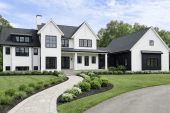
ELEMENTS OF STYLE: Some developers want their communities to have a unique look and feel while conforming to strict design guidelines. At The Peninsula at Indian Bay, in Delaware, such guidelines permit coastal home designs. Some are in the New England style, while others—such as the Hampton model, shown here—have a more Southern architecture.
8. LAVISH ATTENTION ON AMENITIESThree basic rules apply to the amenities for a resort community: (1) they must be first class; (2) they must be comprehensive; and (3) they should be designed to fit the theme of the community.
The basic requisite amenities include a spa or wellness/fitness center; upscale restaurants; a hotel or guest houses for visitors; a pool; a golf course; a post office and other basic town services; and transportation to get residents and visitors to and from the community's attractions. In some cases, the design itself becomes one of the amenities—in many communities, nature trails, gardens, and landscaping features become attractions in their own right.
Subtle touches matter when it comes to the amenities. At Old Palm, for instance, the women's clubhouse was designed with a spa and a grill room, in part because the builders knew that they wouldn't be playing as frequently and would use the clubhouse as a social resource.
9. MARKET AGGRESSIVELYWeb sites, focus groups, and research all play a part in marketing a resort community, as do working the media and offering model home tours. The process should start early. “We sold homes from a trailer for a month before opening our marketing center,” recalls Goldstein. “Although we had nothing more than a Web site, we had people lined up waiting to buy.”
At Auberge, the key to the marketing process was the company's prior success. “What helps us compete is the quality and strength of our brand. People know us and have had wonderful experiences at our other properties, which gives us an edge,” explains Harmon. “But you still have to get people there. You can write all the words you want, but you have to get people to have the experience. We invite guests who have visited other properties, throw events and openings, and do a lot of PR work. We get travel writers and editors to come see what we've done. It's really word of mouth that makes the impact for us because we're dealing with a relatively small group of people.”
The marketing effort can extend beyond the local area. “We do a lot of national marketing,” says Curtin of the Old Palm approach. “We generate leads from all over the country. These leads go to 30 licensed salespeople in Tampa, Fla., who qualify them and get them to the appropriate community.”
While WCI presells memberships to the golf club before it's built, according to Curtin, the developer seem to be in the minority. Says River Dunes president Mitchell, “We don't do it that way, we start with the amenities and get them in or well under way before we start our sales process.” Mitchell believes that taking control of the amenities puts the developer in a position to increase the community's value over time. “We're willing to stay in the process and make sure its value appreciates. I think you'll find that in most great planned communities, that's the course that most developers take. They don't just give birth to it, they actually raise it.”