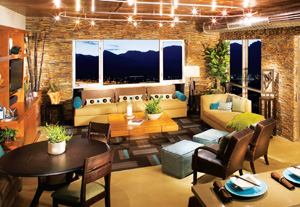
CONVENIENCE IN STORE: Upon build-out, C2 Lofts at Summerlin will house its own commercial district, putting  basic necessities (and more than a few indulgences) within walking  distance of its upscale residences.

CONVENIENCE IN STORE: Upon build-out, C2 Lofts at Summerlin will house its own commercial district, putting basic necessities (and more than a few indulgences) within walking distance of its upscale residences.

Credit: Studio J

UPWARDLY MOBILE: C2 Lofts offered Las Vegas buyers an alternative to single-family living—and  they jumped.

UPWARDLY MOBILE: C2 Lofts offered Las Vegas buyers an alternative to single-family living—and they jumped.

Credit: Studio J

Credit: Studio J

Credit: Studio J

The housing market is hurting everyone, and 2007 will surely go down as the year many builders crashed and burned. But there are a few Teflon ventures that have managed to defy the odds and rack up healthy sales in an otherwise weary landscape. And they aren't necessarily using incentives or gimmicks to move inventory. In many cases, savvy design is what's helping these beacons outshine the competition and snap buyers out of their inertia.

In this feature, Builder takes a closer look at a handful of such projects and reports back on who's buying them, for how much, and what it is that makes them too good to pass up.

Lofty Thinking

A Las Vegas builder gambles on a vertical product type and wins big.

When Christopher Homes developed plans for the first two mid-rise buildings to be unveiled as C2 Lofts, the thought was to stick its toe in the water and see how buyers would react to a vertical housing type not indigenous to Las Vegas. Let's just say that since then, the builder has taken the plunge, with 20 more loft buildings in the works for what is now to become a 36-acre, urban-style neighborhood in the larger master planned community of Summerlin.

“We said early on that if the market accepted this type of product, we'd expand, and that's exactly what happened,” says Erika Geiser, vice president of marketing for Christopher Homes, which is now anticipating 800 loft-style residences upon build-out, including some that are live/work units for retailers. “Most affluent people in Las Vegas live in single-family detached homes, so we weren't sure what the reaction would be.”

By all accounts, it's been positive, if preliminary sales are any indication. The first loft building opened in July 2007 with 40 units, of which 32 were sold (25 closed escrow) by late September. At press time, 13 more lofts had been sold in subsequent buildings. Eight of those sales happened over a period of 10 days.

Buyer curiosity has been further confirmed by traffic jams in the models, which officially opened in September and drew more than 675 groups (Geiser estimates about 1,350 people) in the first four weeks. “By comparison, other mid-rise projects in Las Vegas are barely getting 10 groups in a week, and one or two sales per month,” she says. “That's if they're lucky. Some are just getting cancellations.”

Quintessential loft features such as open floor plans, floor-to-ceiling windows, exposed ductwork, and brick wall treatments have no doubt fueled buyer fever, but the unique selling proposition has been as much about lifestyle as architecture, Geiser says. Shared amenities include a Zen courtyard, a bamboo garden, a furnished roof garden, a dog park, a heated pool, a spa, a fitness center, and concierge services. The project is also within walking distance of oodles of restaurants, shops, and entertainment venues, including the new Red Rock Casino and Spa.

“Land is scarce and expensive now, so more builders are building vertical,” Geiser observes. Apparently it's a good bet.

Project: C2 Lofts in Summerlin, Las Vegas; Sales started: June 2006; Units planned: 800; Price: mid-$300,000s to $1 million+; Unit size: 900 to 3,300 square feet; Builder/Developer: C2 Lofts, a Christopher Co., Las Vegas; Interior designer: Design Tec, Las Vegas; Landscape designer: Nuvis Landscape Architects, Las Vegas

Buy Me a River

CITY MIX: The inhabitants of Riverscape townhomes are a diverse lot, including single  professionals, young married couples, families with small children, and empty-nesters.

CITY MIX: The inhabitants of Riverscape townhomes are a diverse lot, including single professionals, young married couples, families with small children, and empty-nesters.

Credit: Apollo Development

Credit: Apollo Development

Credit: Apollo Development

Portland, Ore., townhomes mix city life with suburban comfort and the great outdoors.

Developers Tim Ralston and Dan Grunewald could have taken the path of least resistance and specified a much higher density (something city officials wanted, to boost the tax base) on this prime piece of waterfront property just north of Portland's Fremont Bridge. Their push to gain approvals for a down-scaled, almost suburban housing type seemed counterintuitive from a profit standpoint, but ultimately proved a shrewd move.

Sandwiched between the banks of the Willamette River and the city's legendary Pearl District, Riverscape offers a rare combination of nature, water, and urban hipdom that one would be hard-pressed to find elsewhere in town. And guess what? Sales have been brisk.

It didn't take long for outdoorsy types to take note of the neighborhood's pedestrian connections. Walkable points of interest include restaurants, shops, and culture, but also hiking and biking trails, a boardwalk, and a 61-slip boat and kayak marina, which was completed as a project amenity.

The Riverscape Townhomes—which occupy 4½ city blocks and will eventually be joined by 3 ½ blocks of stacked flats and an eight-story luxury tower—opened for sale in March 2006. By August 2007, 52 of 104 units were sold, with all of the units in phases two, three, and four closed and two more phases still under construction. Nearly all of the townhome residences feature a two-car garage with direct unit access—a luxury that is virtually unheard of in urban territory.

Formerly occupied by the Port of Portland's Terminal One building, the site retains its original pier and respects the area's maritime industrial flavor with geometric façades marked by metal, stucco, and brick veneer “rain screen” cladding. To savor river and skyline views, residents need only step out onto their spacious private verandas with built-in gas taps for barbeque grills.

“The design was changed to enhance those outdoor living spaces after the early blocks opened,” says Lori Ralston, a listing broker for RE/MAXEquity Group Realtors. “Feedback told [the builder] to carve 300 square feet out of each plan and make it into a third-floor patio deck area. In the city, you often get small, not-so-comfortable outdoor spaces. It was easy enough to offer something better here.”

Project: Riverscape Townhomes, Portland, Ore.; Sales started: March 2006; Units planned: 104 townhomes; Price: $549,900 to $919,900; Unit size: 1,489 to 2,153 square feet; Builder: Apollo Custom Homes, Portland; Developer: Apollo Development, Portland; Architect: Leeb Architects, Portland

BODY ECLECTIC: The upscale residences at Eastern Columbia Lofts blend retro style with modern  luxuries such as industrial-grade appliances and large soaking tubs.

BODY ECLECTIC: The upscale residences at Eastern Columbia Lofts blend retro style with modern luxuries such as industrial-grade appliances and large soaking tubs.

Credit: Kor Group

Credit: Kor Group

Credit: Kor Group

Curtain Call

For an adaptive reuse project in L.A.'s Broadway Theater District, it's all about the glam factor.

It's hard to go wrong when your starting point is what many consider Los Angeles' most beautiful building. But then again, being the plastic surgeon entrusted with the face-lift of a renowned beauty—in this case, a striking Art Deco tower that epitomized opulence during its heyday in the 1930s—isn't a job for the shaky-handed. The Kor Group and its design partners held steady with the conversion of this iconic landmark, accentuating the structure's classic features, while eliminating those that were old and tired.

On the outside, the renovation of the Eastern Columbia Outfitting Cos.' 13-story tower (formerly an upscale clothier for the stars) appears subtle and effortless, and that's the art of it. In fact, the project, now called the Eastern Columbia Lofts, involved extensive (and historically abiding) restoration of the building's exquisite turquoise and gold terra cotta façade, deep-recessed windows, four-sided clock tower, two-story vestibule, and colorful terrazzo sidewalks. Ceiling heights (which varied by floor) were left intact in the steel-reinforced, concrete structure, but the spaces between them were gutted and repurposed as 147 airy lofts blending modern fixtures and finishes with vintage period details such as original windows, beams, columns, and decorative molding.

Young, affluent professionals were quick to snatch up 60 percent of the eclectic units in two kick-off events that signaled the tower's comeback. “The people who live here are passionate about the building,” says Kimberly Lucero, vice president of residential sales and marketing for Kor Group. “They do a lot of progressive parties that move from one floor to the next so everyone can see what their neighbors have done with their homes.”

The first units were introduced in November 2005; out of 147 total, just eight are now left. Six of those are penthouses that were not released until August 2007, “which partly explains why they haven't sold yet,” Lucero says. The building now houses no fewer than 20 different floor plans.

As befits a grand dame, Eastern Columbia has become a catalyst for upgrades to surrounding Victorian, Beaux Arts, and Art Deco buildings, restoring elegance and high style to an area that had fallen into decline. Its crowning amenity is a rooftop pool deck offering breathtaking views of the city.

“To envision yourself sitting up there with the sun going down, sipping a cocktail after work is pretty grand,” says Lucero. And in a place such as L.A., there's always the chance one of Hollywood's hottest stars might be sitting next to you, martini in hand.

Project: Eastern Columbia Lofts, Los Angeles; Sales started: November 2005; Units planned: 147, including 8 penthouses; Price: $400,000 to $3 million; Unit size: 866 to 3,208 square feet; Builder/Developer: Kor Development, Los Angeles; Architect: Killefer Flammang Architects, Santa Monica, Calif.; Interior designer: Kelley Wearstler Interior Design, Los Angeles photos: courtesy kor group

SEE AND BELIEVE: New England buyers are generally averse to detached garages, but that hasn't  stopped Leslie Clement from building them. “They look nicer, and the  end result is a friendlier looking street,” she says.

SEE AND BELIEVE: New England buyers are generally averse to detached garages, but that hasn't stopped Leslie Clement from building them. “They look nicer, and the end result is a friendlier looking street,” she says.

Credit: Ames Design

Credit: Ames Design

Credit: Ames Design

New Old House

Modest homes in a Yankee city revive classic American architecture, noting that nostalgia is in the details.

In the late 19Th Century, Springfield, Mass., earned the nickname “City of Homes” in recognition of its stately Victorian mansions and more humble (but no less architecturally significant) worker cottages. That legacy is one that Leslie Clement takes seriously to this day.

Clement builds just 10 houses a year, so quantitative sales numbers don't provide the most dramatic measure of her company's success in this moderately depressed Northeastern city (she has sold six homes in the last 12 months). But here's another statistic worth noting: In a market where comparably sized new, single-family homes are selling for $275,000 to $315,000, Clement's are commanding $350,000 to $390,000. And that premium hasn't budged much with the housing slump.

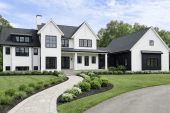
The kicker, she says, is a faithful observance of many of the city's older (and somewhat lost) architectural styles. Whereas other local builders are churning out bread-and-butter colonials with one-car, front-loaded garages en masse in the suburbs, Clement has cultivated a distinct buyer niche with modernized versions of the Craftsman kit houses once sold in Sears and Roebuck catalogs. And they're tucked inside city limits.

“I study old-style homes from the 1920s and adhere to their details and proportions on the outside, but then change the floor plans inside,” says Clement, a one-time union carpenter and historic preservationist who now serves as developer, designer, general contractor, and listing agent on infill properties created under the name Ames Design. She wagers that she probably saves $5,000 per house by designing her own plans, many of which now include first-floor master bedrooms. “If I need to move a toilet or change the electrical wiring plan, I can do it myself, which is not just a cost-saver, but a time-saver,” she says.

Most of the homes in Forest Park, the 37-lot infill development that has occupied her time in recent years, feature detached garages, painted clapboard or fiber-cement siding, wood shingles (or in some cases, restoration-grade vinyl shingles that look like the real thing), and natural or cultured stone. Authentic trim detailing is paramount.

And then there are the little touches inside, such as built-in window seats, wainscot beadboard, and stacked kitchen cabinets that run flush to the ceiling (she specs builder-grade stock but then tricks them out with glass panels, inset lighting, and decorative molding). Or floor plans that are tweaked during construction to accommodate buyers' heirloom furniture.

“The thing that gets people to move back to the city [or to not abandon it for the suburbs] is when they fall in love with a house,” says Clement. “That's what we're shooting for.”

Project: Forest Park, Springfield, Mass.; Units planned: 37 homes on 16 acres; Unit size: 2,200 to 2,600 square feet; Price: $350,000 to $390,000; Builder/Developer/Residential designer: Ames Design, Springfield

Farm System

ESTABLISHING ROOTS: Many homes in phase 1 at Silver Springs have sold to first-time buyer families. In  some cases, grandparents have expressed intent to buy homes in phase  two so they can be near their grandkids.

ESTABLISHING ROOTS: Many homes in phase 1 at Silver Springs have sold to first-time buyer families. In some cases, grandparents have expressed intent to buy homes in phase two so they can be near their grandkids.

Credit: Steelhead Development

Credit: Steelhead Development

Zoning reform renders homes more affordable (and more marketable) in a rural community.

Debates over density usually occur in urban and suburban locales where land is scarce and tensions over traffic are high—not in zip codes where greenfields stretch out as far as the eye can see. So at first it seems odd that the small town of Fowlerville, Mich. (population 2,800) would put issues related to units per acre before its town council. Land has never been in short supply in this stretch of farmland between Detroit and Lansing, Mich. But affordable homes for workforce buyers (including farmers) have been hard to come by.

That chronic problem is partly what prompted the town council to pass an affordable-housing ordinance in 2005 that knocked the minimum square footage of a single-family home down from 1,800 square feet to 1,000 square feet for a one-story home, and 1,450 square feet for a two-story residence. The ordinance also paved the way for higher density, allowing lot dimensions equivalent to a “city unit” measuring 66 feet wide by 132 feet deep (approximately four units to the acre) as an alternative to the average single-family lot in the area, which runs ¾ to a full acre.

Builder/developer Dennis Korenchuk was among the first to put the new parameters into practice with the introduction of Silver Springs, a community of 204 homes, which, upon completion, will constitute one of the largest developments in the town's history. Of the 40 homes planned in phase 1, 17 have been built and 14 are now sold and occupied.

“We opened a year ago and sold 14 houses in 12 months, which in Michigan is pretty darned good,” says Korenchuk. Roughly half of buyers have tapped into HUD rural home development loans, he adds, which allow them to buy with no down payment and to consolidate their debt into a single mortgage in lieu of the standard 80/20 split.

With its traditional elevations and prices starting in the mid-$120s, Silver Springs has proved both attractive and attainable for many first-time buyers. “Another segment we didn't anticipate is people who are coming off divorces and downsizing to live on one income,” says Korenchuk.

Upon build-out, Silver Springs will span 147 acres, 90 acres of which will be preserved as open space, including 20 acres designated as community parks. But for now, the open land that has yet to be transformed is being put to good use. “This site was previously a farm, and we are still farming on the acreage we aren't using,” says Korenchuk. “Farmers in the area lease the land from us. This year we cropped 60 acres of soybean and last year we did feed corn. Next year, we'll crop 50 acres and carve out another 10 for development.”

Project: Silver Springs, Fowlerville, Mich.; Sales started: September 2006; Units planned: 40 homes in phase 1 (204 upon completion); Price: mid-$120,000s to $160,000; Unit size: 1,000 to 1,200 square feet; Builder: Komar Construction, Brighton, Mich.; Developer: Steelhead Development, Brighton; Architect: Prince Architecture, Brighton photos: courtesy steelhead development