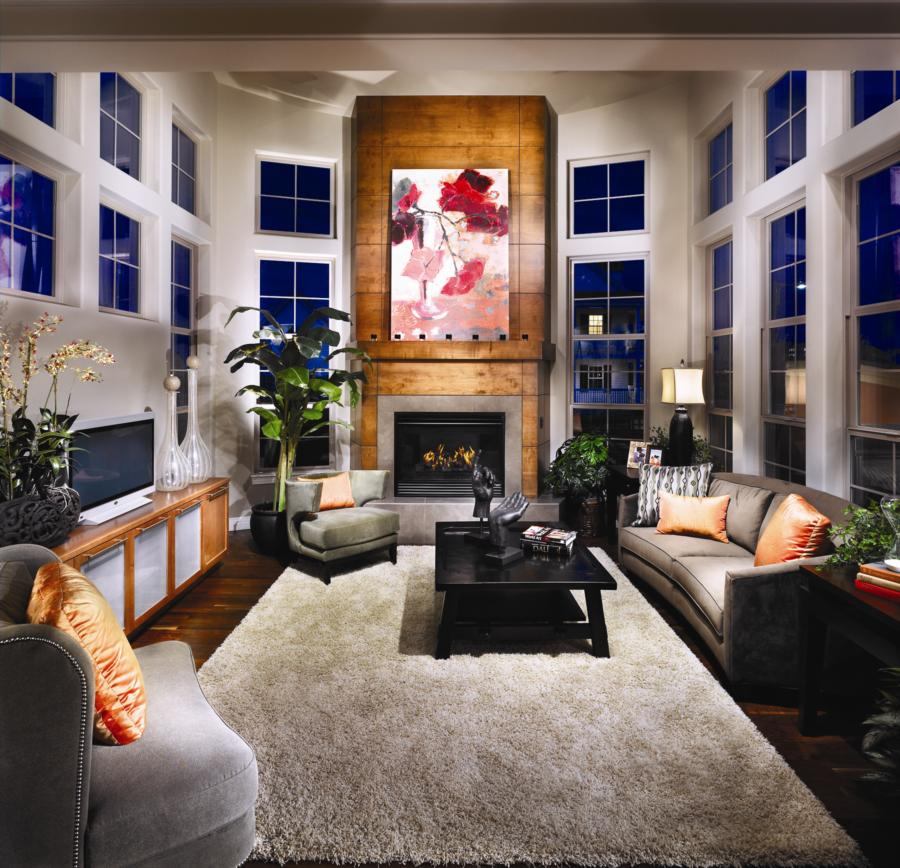
Model homes have long been the central element of the new-home sales process. And merchandising those models is designed to engage prospective buyers, help them envision living in the home, and show them the possibilities that are available with options and upgrades.
But with builders scrutinizing their budgets for every conceivable way to cut costs, it’s not surprising that model merchandising often doesn’t rank very high on the list of priorities.
Yet, it should. Nothing should be left to chance in the effort to connect with prospects, and model merchandising is something a builder can control.
We spoke with four nationally respected interior designers—Mary DeWalt, president of Mary DeWalt Design Group in Austin, Texas; Lita Dirks, president of Lita Dirks and Co. in Greenwood Village, Colo.; Kay Green, president of Orlando, Fla.–based Kay Green Design; and Doris Pearlman, president of Possibilities for Design in Denver—about what kind of model merchandising makes sense for 2009. Here are some of their thoughts:
Simplify
Today’s decorating style is open, clean, and uncluttered. You may be able to give your models an updated look just by taking out some of what’s already there or by replacing several small accent pieces with one larger, bolder piece.
The big benefit from this, DeWalt says, is that the less cluttered the merchandising is, the more the buyer will see the house. “You want them to leave saying, ‘I love that house,’ not ‘I love those drapes.’ Merchandising is really complementing the home.”
Dirks suggests scaling back on window treatments and wall-paper, which are a high-cost area because they require materials, fabrication, and installation.
“In today’s trends, drapery is very minimal anyway,” Dirks says. “If you’re designing homes that are newer looking, the windows are part of the beauty of the floor plan. Show them off and put an accent color around the windows.”
Recycle
While some furniture may need to be replaced because it looks dated or has gotten shabby, there may be several pieces that can be reused. Pearlman has begun offering a new service called Renew, Refresh, Revive based on this concept. She completely changed the look of one model by changing the wall color from beige to a smoky blue, replacing the carpet with stone flooring (“You could also use wood,” she says), installing a new mantel over the fireplace, and adding a new rug and two chairs. “We used the same sofa, left all the draperies, and left the dining room in place.”
Master bedrooms are particularly easy to update, she says. “We did a job that won awards last year at the Boomers and Beyond conference,” Pearlman says. “The builder wanted to reuse all the furniture. We updated the overall wall colors, added new bedding and a new headboard to the bed, and maintained everything else.”
Learn more about markets featured in this article: Austin, TX.