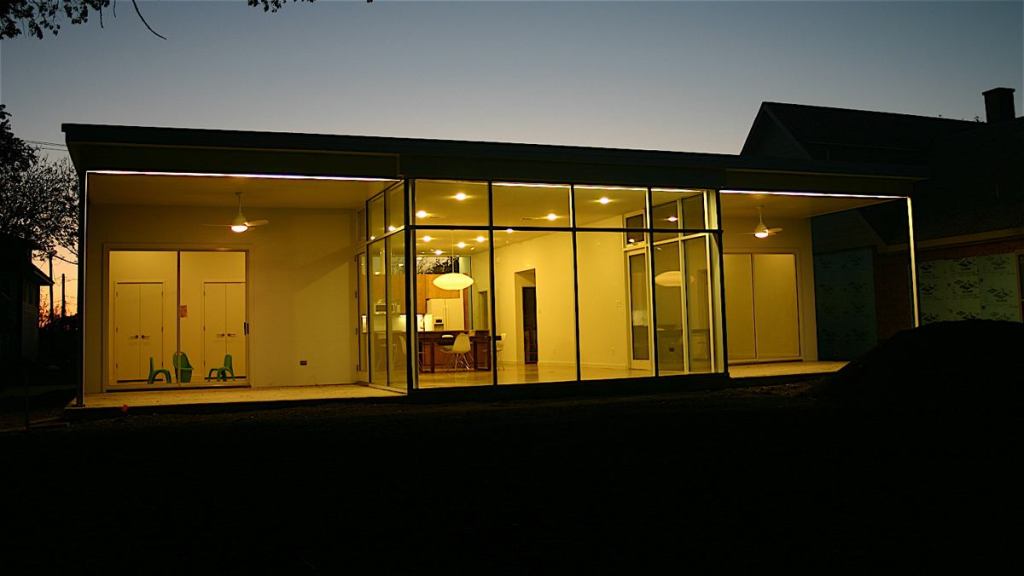
High-performance builder Ferrier Custom Homes, in Ft. Worth, Texas, is having a record year despite the fact that the economy has been tough on some clients.

High-performance builder Ferrier Custom Homes, in Ft. Worth, Texas, is having a record year despite the fact that the economy has been tough on some clients.

Credit: Courtesy Ferrier Custom Homes

Super-tight lending standards, dwindling buyers, the stock market crash, and a global recession have made this one of the worst times in history to be a home builder.

“The market is devastated all across the country, across the board: single-family, multifamily, remodeling, and even low-income, every sector has been affected,” according to Carlos Martin of the NAHB.

Green building pros have not been spared from economic gloom, says Martin, assistant staff vice president for construction, codes, and standards: “It’s disingenuous to act like there is not any bad news for green builders.”

Nevertheless, many green pros are finding an upper hand that’s helping them survive the market, and some are even thriving due to increasing demand for eco-friendly dwellings, new funds for green public projects, and passage of the $787 billion federal economic stimulus bill.

Business at a Standstill
In some markets, green builders and architects report business is at a near standstill. Home buyers battered by the stock market crash have put their sustainable projects on hold indefinitely. Even with new government tax credits and rebate programs and the promise of lowered utility bills, many cash-strapped homeowners are hesitant to spend money on energy-efficient remodeling projects.

Like traditional builders, green pros are laying off coveted employees, in some cases even family members.

In an ironic twist, regions that have been on the forefront of the green movement seem to be hit the hardest by the slowdown. Green builders in California, Colorado, and New England are suffering more than those in other areas because the general construction market is doing so poorly, Martin says.

“Housing is always localized,” he explains. “Even though in California you have heightened awareness of green building and remodeling, the housing market there has been devastated, so green is really struggling in places like that.”

San Francisco residential architect David Baker concurs.  “As a business, market-rate housing is close to dead right now,” says Baker, a partner of David Baker + Partners Architects. “Some long-term projects are still going through the approval process, but that’s pretty much it for the private sector.”

Even some non-profit affordable housing projects--which are almost always green--are being delayed due to California’s budget crisis, which has made it difficult to sell bonds and tax credits, Baker says.

Heather Ferrier of Ferrier Custom Homes in Ft. Worth, Texas, says the stock market decline had the biggest impact on her family’s sustainable-building business. “We had clients who overnight were severely impacted by the plunge, which caused their home building plans to be postponed, in some cases indefinitely.”

In Denver, where housing starts are down 59% from a year ago, officials of Colorado’s 14-year-old green building program recently made a painful decision: Built Green Colorado, one of the first programs of its kind in the country, stopped accepting home registrations June 1. “We are facing an economy that is extremely challenging for us all,” said director Kim Calomino in a letter to members. “The financial realities of today’s housing market force us to make very difficult decisions. The HBA of Metro Denver has in fact reached one of those difficult decisions regarding Built Green Colorado: Built Green Colorado cannot afford to operate under its current structure and in its current form.”

And late in May, Oakland, Calif.-based Michelle Kaufmann Designs shut down, a victim of deflated housing prices and the credit industry meltdown. The closing of the company, a highly respected designer of pre-fab green homes, sent shock waves through the residential architectural community.

“Despite our best efforts, the financial meltdown and plunging home values have caught up with us,” architect Kaufmann wrote on the company blog. “The recent closing of a factory partner as well as the gridlocked lending faced by homeowners has proved more than our small company can bear.”

Eco-friendly affordable housing projects are helping to keep David Baker + Partners, a San Francisco architectural firm, afloat. The firm has two such projects in the planning stages. “Without them our current situation would have been bleak,” Baker says.

Eco-friendly affordable housing projects are helping to keep David Baker + Partners, a San Francisco architectural firm, afloat. The firm has two such projects in the planning stages. “Without them our current situation would have been bleak,” Baker says.

Credit: Courtesy David Baker + Partners

Silver Lining
For some green pros, in certain markets, there is a silver lining to all the bad news.

For example, Ferrier says although some of her clients have had to deal with financial setbacks, others have recommitted themselves to building sustainable homes. “For those individuals, the current market conditions have only refueled their passion to move forward with building sustainable homes,” she says.

Her company is proof that there are still financial opportunities in her Texas market for veteran green builders: Ferrier Custom Homes is having a record year. “The experienced green builders who have been doing this for a while--who know that green is more than just a fad,” are surviving and even thriving, she says. “Those who are truly committed, and have established themselves as so, are riding it out.”

Chevy Chase, Md.-based Bethesda Bungalows also is riding the wave of interest in sustainable and energy-efficient homes. The company is known for building small- to medium-sized green residences on infill lots in Washington, D.C.’s close-in neighborhoods.

While the market for spec homes has dramatically dropped, vice president Brad Beeson says the company’s custom home business is thriving. “It’s been really busy--super busy,” he says. “A lot of it is because that we are known locally as a green builder. That has been really good for business.”

Even though customer interest in building high-performance homes has not waned since the economy turned sour, Beeson says financing is trickier now. “We’ve had situations where deals were discussed 18 months ago, and when we finally get to the settlement table, sometimes it’s a different story with the bank,” he says.

Other Ways to Survive
Some green pros are staying afloat with public-sector projects. Baker says his firm is working on green affordable housing complexes funded by the California Department of Housing and Community Development’s Proposition 1-C bond program. “Without them our current situation would have been bleak,” he says. 

On the federal front, the $787 billion economic stimulus bill is expected to create jobs for insulation contractors, window installers, and other pros whose work involves making existing homes more energy efficient. Two provisions that offer tax credits to homeowners for energy-efficient upgrades and pay to weatherize the houses of low-income families could spur an estimated $6 billion of activity in the remodeling industry, according to congressional estimates.

The NAHB’s Martin says green remodelers are on track to benefit from these programs, but it will take a while to get them up and running. Many technicalities have yet to be worked out for the weatherization program and consumer interest in rebates has been lackluster.

“The problem is homeowners are still holding back because they don’t know if they can afford to do anything to their homes, even with the credits,” he says. “But anything that helps spur interest in housing investment is a plus for builders and remodelers.”

Los Angeles-based Pardee Homes is banking on green’s appeal to help sell more houses, at every price point. The company recently expanded its LivingSmart brand--a package of products and measures that boost energy efficiency, save water, and improve indoor air quality to include every price point and every market in which Pardee is building or developing master-planned communities.

The company’s research determined what buyers want in a green home and what they feel they can afford, according to president and CEO Michael McGee.

“Green programs must be tempered with feasibility in the production housing framework,” says McGee. “We have maintained this dual focus since introducing our first energy-efficient homes and it has paid off with greener homes that are competitively priced.”

Other recent research bears this out. In a recent McGraw Hill study, 40% of builders reported a marketing advantage from green homes during the current housing slump. More importantly, 70% of consumers said they would be more inclined to purchase a green home in a down market.

Analysts believe the green home market is expanding despite the downward trends of the industry as a whole. With a stronger construction market expected over the next five years, eco-friendly building is expected to see healthy growth, according to McGraw Hill’s 2009 Green Outlook. “We expect it to double over the next five years, to be worth 12% to 20% of all residential construction starts by value, or $40 billion to $70 billion,” the study’s authors say.

The future of residential building is uncertain for now, but most green pros say they are confident that once the market bottoms out, eco-friendly home building will help lead the industry out of its economic doldrums.

“Our market conditions did not end up like this overnight, and there won’t be a quick fix either,” concludes Ferrier. “We plan to keep at it, to keep doing what we’ve been doing, but with a new sense of urgency.”

Jennifer Goodman is senior editor for EcoHome online.