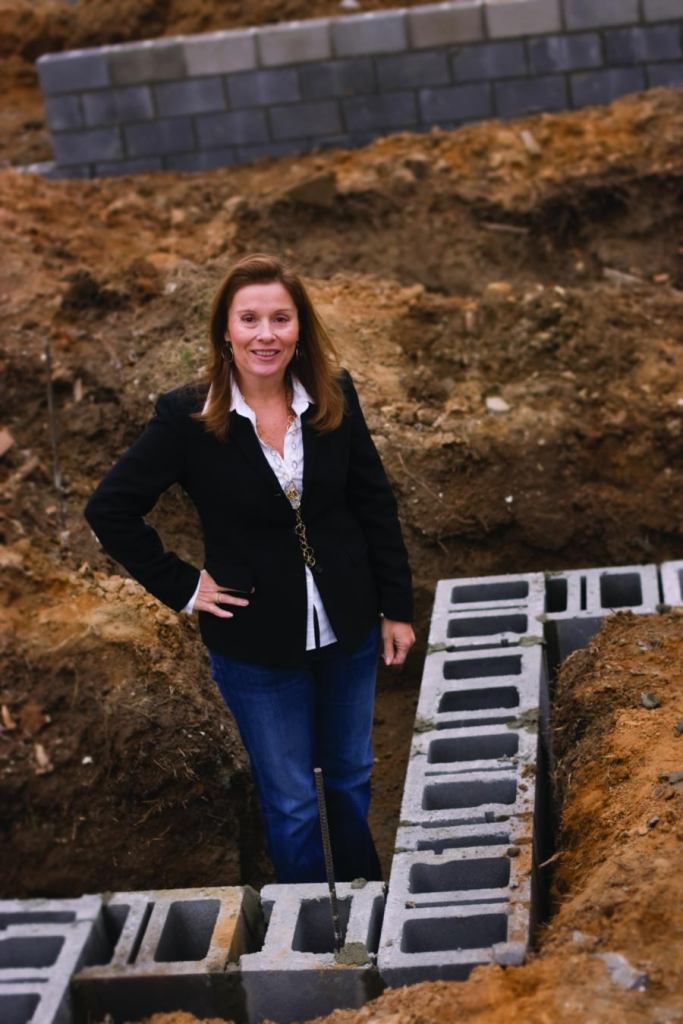
On the beach: Michelle Dashiell is co-owner of Joseph T. Dashiell Builders in Maryland, which last spring launched a separate business, Beach Transformations, to manage its remodeling and commercial work. Since the launch, it’s been fielding two to three referrals a week.
Credit: Chris Hartlow
In a good year, Tower Park Construction in Twinsburg, Ohio, builds about two dozen homes. But through mid-October 2008, Tower hadn’t started a house in two years. Like thousands of other builders anxiously waiting for their markets to recover, Tower is “holding on,” says owner Jeff Budzowski, by taking on remodeling and commercial construction projects.
“Builders who would have turned their noses up at certain kinds of work are getting into renovation, commercial, retail, and even limited-scope projects like decks,” says Chris Pattey, director of residential construction for the Salisbury, Md.–based architectural firm Becker Morgan Group. The St. Louis Post-Dispatch recently reported on one custom builder, Padgett Building and Remodeling in Swansea, Ill., which now gets 70 percent of its business from remodeling, versus 40 percent in previous years. And the same tale is being told in every corner of America’s hobbled housing industry.
“We’re doing a lot of remodeling,” says Budzowski. Those jobs have included adding garages and sunrooms and finishing basements, as well as a complete makeover of a house owned by a player for the Cleveland Browns football team. Budzowski’s previous background was in retail store development, and he has also attempted to expand Tower’s business into renovating shopping centers. “What we found is that there’s not a whole lot going on” in that sector, he says. But Tower has bid successfully on some industrial projects, including a $130,000 renovation for a local generator systems distributor. Tower expanded the distributor’s offices, added a showroom, and spruced up the service and conference areas.
Budzowski’s experience illustrates some of the advantages and limitations of diversification: Yes, it keeps cash flowing, but the jobs are generally smaller, the margins can be tighter, and builders must compete with everyone and his brother who are in the same boat they are. “The market for any kind of job is more crowded these days,” says Michelle Dashiell, who co-owns Joseph T. Dashiell Builders in Ocean City, Md., which last spring launched a sister company, Beach Transformations, to manage its renovation and commercial work.
It’s true that shifting into commercial construction or renovation is no guarantee of success, as both sectors have slumped recently. But with residential construction on its back, builders may have little choice but to diversify, observes San Diego–based architect Kevin deFreitas. “The market that has existed for the last 30 years doesn’t exist anymore,” he warns, “and won’t exist in the future.”
New divisions for business
Several builders whose companies have made the transition to other types of building say they expect such moves to outlast the housing recession. “We want to make an effort to restructure the company, because we definitely see the demand” for renovation, says Dashiell. Since her company started Beach Transformations, it has been fielding two to three referrals per week and has completed such projects as a $70,000 interior remodeling of a financial services office, a roof replacement on a condo complex, and even a deck installation.

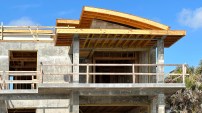
Double duty: Rachel Matthew Homes in New Mexico is tapping into buyer demand for office space that features the same ornate interior architectural design as their homes.
Credit: Courtesy Rachel Matthew Homes
The Dearborn Buckingham Group, a single-family and townhouse builder in Northfield, Ill., recently set up a separate division, Buckingham Properties, to handle remodeling projects, and a few months ago started contacting its home buyers to see if they were interested in improvements such as basement finishing or kitchen upgrades. “So far, the response has been pretty good,” says Chris Coleman, Dearborn’s president. But his company appears to be one of the few production builders that have moved in this direction. Builder contacted nine of the top 30 builders and none was taking on renovation or commercial work even as a stopgap. “We did a little remodeling but found that it was so different from what we do,” says Scott Buescher, COO of Mercedes Homes in Melbourne, Fla. He also notes that commercial construction in Mercedes’ markets also “has started to die out.” One executive with a top-10 builder thinks production builders must concentrate on what they are best at, regardless of economic conditions. “There’s not a builder out there that’s so good that it can distract its management from its core competency.”
Coleman, whose company continues to build houses, disagrees. He thinks builders can do both and may have an advantage over conventional remodelers because builders’ estimating and bidding processes are more sophisticated. Day to day, though, Coleman does find remodeling to be different from production home building “in almost every aspect. It’s similar to building a custom-made house [in terms of] scheduling requirements. Plus, the owner is living in the house,” so on-site supervision of the project is more intense.
Accommodating requests

Credit: Courtesy Rachel Matthew Homes
During the downturn, some builders stumbled into renovation and commercial work. Two years ago, for example, Rachel Matthew Homes in Corrales, N.M., built a 4,500-square-foot office for itself that included many of the flourishes found in its high-end custom homes: granite countertops, Viking appliances, and fine trim details. Its president, Steve Nakamura, says he intended to use the office as a showcase for the options his company offers to its home buyers.
“We realized there was a market for this kind of building,” he recalls, when a commercial broker brought one of his clients to the office, and that client offered to buy it. Nakamura accepted that offer, acquired another lot, built a 6,500-square-foot office that was even more ornate, and then sold that building in November for more than $1 million. Now, Rachel Matthew Homes is buying land for 25,000-square-foot office/condo complexes. “The people we build our McMansions for are their own bosses and want to work in an amenable environment,” Nakamura explains. And his appetite has been whetted for commercial work in general: This fall, his company negotiated to build a 7,000-square-foot fire station for the city of Rio Rancho, N.M.
Other builders are acquiescing to the requests of existing or former customers. Last summer, T.W. Lewis, a custom builder in Tempe, Ariz., received a call from a buyer who had purchased a home from the company in 1996. The owner wanted Lewis to remodel his master bath and kitchen. T.W. Lewis had turned down similar requests from owners in the past, but its COO, Kevin Egan, thought remodeling might offer a welcome revenue stream in the down market and accepted the job.

Another revenue stream: T.W. Lewis’ COO, Kevin Egan, sees remodeling as an extension of this
custom builder’s trade-up program, where it purchases buyers’ homes, remodels, and then resells them.
Credit: Wes Johnson
Thanks to T.W. Lewis’ Design Center team, what began as an $85,000 job expanded into a $190,000 whole-house renovation that included new wiring, doors, stairs, and flooring. Egan adds that the owner was “most impressed” with how quickly the builder got the job done. “We signed the contract on June 3 and were finished by July 15,” with the actual construction work taking only three weeks.
Egan now sees remodeling as a “natural progression” of the T.W. Lewis “Trade Up to Luxury” program it began in the summer of 2007, through which it purchases buyers’ homes and renovates them for resale. The builder has purchased and resold 35 houses, in which it has made mostly cosmetic improvements such as replacing carpeting or lighting fixtures.
On the basis of that first whole-house renovation job, Egan thought it would be relatively easy to attract more remodeling work. But as of mid-October, T.W. Lewis had captured only three other projects, ranging from $25,000 to $100,000 in scope. “The challenge is the economy,” Egan says. “People are hesitating to spend more money on their homes, and it’s going to take some time to develop this business.”
Have labor, will travel
Diamante Custom Homes has built both residential and commercial projects for years but limited its services to customers within 30 minutes of its San Antonio headquarters. In early 2007, a client asked the builder if it would renovate a bus terminal in Eagle Pass, 150 miles away on the border of Texas and Mexico. Adam Sanchez, Diamante’s owner, took on this $300,000 project, but only after he was sure he’d have sufficient labor to complete it. “What surprised us was that our subs were willing to go down there,” says Sanchez. With the approval of its client, Diamante paid its subs a trip fee of $75 to $100 per day, or a per diem for meals and lodging.
Labor hasn’t been a problem for other builders who say they are using their residential contractors for most of the remodeling and some of the commercial work they take on. Coleman notes, though, that he’s had to broaden his trade base because some remodeling projects are too small for his home building subs. And Dashiell says her subs have learned to make concessions about what they charge if they want work, because “margins on renovation jobs are generally lower” than on home building.
To maintain respectable margins, Sanchez says his company, when bidding for nonresidential or remodeling work, stays away from anything that’s higher than three stories or over $500,000 in scope. That way, he avoids mixing with larger commercial contractors that can come to the table with bond financing. At least one builder, though, isn’t shy about going up against larger competitors. Carmen Dominguez, who owns the custom builder Homes by Carmen Dominguez in Orlando, Fla., is in the process of having her company certified as a minority contractor in preparation to bid on some of the $1.1 billion in public works projects in her market.
Dominguez has some experience with commercial projects already: She got her start in construction by building medical offices. And as her company’s home building activities have slowed (at press time, it was finishing a $1 million home but didn’t have other orders), she has joined forces with other companies on private-sector commercial projects such as renovating a hospital. “What I bring to the table is my expertise in custom building, which are jobs that require great finishes.” That expertise is relevant in the commercial world, too, she says. Dominguez points to a 4,500-square-foot office she’s renovating for an accountant and says, “I’m making it a lot warmer.”
Work is where you find it
There’s no question that more builders are turning over every rock to uncover new business. Last December, Budzowski became NAHB-certified as an aging-in-place specialist, a designation he now markets to owners who want to stay in their houses longer. He consults with physical therapists or caregivers “to determine what [the owner] can and can’t do,” and then remodels accordingly, such as making a home wheelchair-accessible or improving its lighting. Budzowski recently spoke about aging-in-place to a senior citizens group in Independence, Ohio, and if that visit produces business, he intends to reach out to other seniors groups.
Based on its success with the bus terminal project, Diamante Custom Homes is now promoting its services to markets farther away. It relaunched its Web site to be more generic and spends more with search engines so that its name pops up more prominently for markets such as Austin, Texas. Sanchez says that he is planning to open a sales office in Port Aransas, Texas, a coastal vacation community two and a half hours from San Antonio, that would target both residential and commercial customers. He expects commercial construction to represent 25 percent of his business in 2008, versus 10 percent to 15 percent in previous years.
Builders such as Sanchez and Nakamura, whose companies have remained reasonably active on the residential front during the downturn, are also eager to sustain their remodeling and commercial businesses long term. That’s true as well of Lonnie & Chad Brown Builders in Versailles, Ky., a company that will build around 35 homes in 2008, down slightly from the 45 it built the previous year. It will also complete 25 remodeling projects. Owner Lonnie Brown says his company will continue to bid on remodeling projects even after the new-home construction market revives. When asked why he would continue relying on lower-margin renovations, Brown responds philosophically. “Well, you can’t eat a lot of filet mignon, but at least you can eat.”
Getting Started
Mixed-use communities are a good training ground for builders looking at commercial, says one developer.

Mixing it up: WRECO’s 586-acre development in New Bern, N.C., will include a town center with offices, parking, and a 300-room hotel, as well as 1,168 home units.
Credit: Courtesy Weyerhaeuser Real Estate Co.
The closest that most home builders get to commercial construction is their involvement in mixed-use communities that combine housing with offices, retail, and other nonresidential structures. But at least one developer thinks such projects are a good place for builders wanting to expand into commercial and industrial projects to cut their teeth.
“The processes and procedures for mixed-use developments are not all that different from strict residential,” says Taylor Downey, manager of community development for Weyerhaeuser Real Estate Co. (WRECO) in Madison, Ga. “You have more conversations with the local planning and zoning folks, and the infrastructure becomes more critical. It can also be more expensive, but there’s more potential for added value, too.”
WRECO has received “considerable interest” from builders wanting to be part of its 586-acre project in New Bern, N.C., that will have more than 1,000 housing units plus retail and a hotel. WRECO also has in the works an 800-acre development in St. Tammany Parish near New Orleans and a 2,000-acre mixed-use community in Onslow County, N.C. Downey says these “new kinds of developments,” with their live, work, and play components, are being brought on by “the economic and infrastructure demands in all of the geographies we work in. They answer a lot of demand questions and are what municipalities are looking for.”
He says WRECO has done similar communities in the Pacific Northwest, and the concept is now “migrating” to all of WRECO’s builder divisions.