Jaguar Boulevard is a long,lonely testament to what has happened to the housing market in Southwest Florida. Miles from even a traffic light, it slices through the subtropical scrubland of the eastern edges of Lehigh Acres. Yet there are new houses here, dozens and dozens of them, many of them owned by residents who work—but can’t afford to live—in Naples, one county to the south.
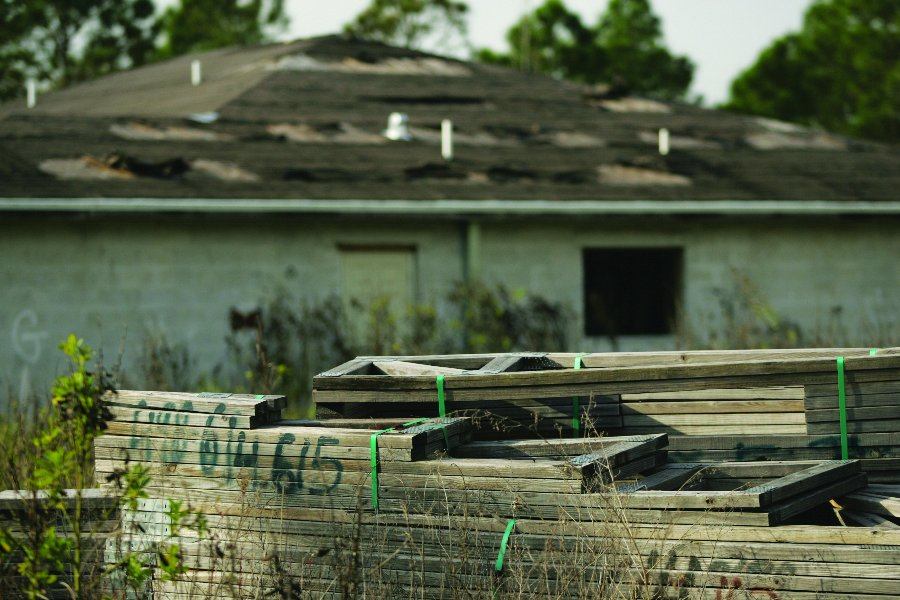
Atop one house, a trio of vultures sits, waiting for something nearby to take its last breath and die. The concrete block carcasses of the Southwest Florida housing market’s freefall are everywhere along the boulevard, just one of hundreds of roads like it in the Ft. Myers/Cape Coral market. For every neatly tended stucco ranch home, there are three or four that have been abandoned in some stage of construction. Some jobs got no further than the rough plumbing coming out of the ground before the money ran out and the builder walked away. Others are finished, sitting sadly on lots choked with weeds and strewn with trash.
This is the mess that builders in the market are dealing with and working against.
“It’s a great market long-term, but there’s a lot of pain to be suffered here,” says Jamie Pirrello, managing partner of Vision Homes USA in Ft. Myers. “We’ve been treading water. I never expected it to get this bad.”
Long, hard fall
And make no mistake, it is bad. In January 2001, 147 building permits were issued for single-family homes in Cape Coral. For the same month in 2005, there were 601. In January 2008, there were 18, and local builders were happy to see that many. A month earlier, there had been nine.
“The farther you go when you bungee jump, the farther you have to spring back,” muses Bob Knight, vice president of Cape Coral–based Paul Homes and president of the Lee Building Industry Association. “It’s distasteful.”
Once touted as the hottest housing market in the country, Ft. Myers/Cape Coral has become “the epicenter in the nuclear attack” of builder bankruptcies, Knight says. Some, such as Levitt and Sons and America’s First Home, have been high-profile closings. Dozens of other smaller builders have simply locked the doors and left.
The impact on the builders who are still in the market has been painful and far-reaching. Aside from having to compete against thousands of foreclosures, short sales, and vacant spec houses, they are struggling to find subcontractors to complete the houses they do have under contract.
“These [bankrupt] builders are taking out suppliers and subs who can’t collect their money and go broke,” Knight says. At the height of the boom, he was building 40 houses a year in the $350,000 to $700,000 range. This year, he’ll be happy if he does 14.
The situation turned particularly dark in February when a construction superintendent for a local builder was jailed. Local news reports said he pulled a gun on a subcontractor who had been stiffed for payment on a window installation and showed up on the jobsite to pull them out.
It’s also created a sizable—and understandable—skepticism on the part of prospective customers, who worry that the builder will shut down before their house is finished and leave them in the lurch.
“We make it a point that all clients get to meet with both owners of the company,” Knight says. “They can look us in the eye and get to know us. It gives them the confidence that we’re experts.”
He’s also spending a lot of time in the community, keeping a high profile. “Networking is very, very critical,” he says. “If you’re not seen at some of the functions, they assume you went out of business.”
Many builders, including Paul Homes, have added remodeling to their portfolio of services, often working with their previous buyers to upgrade their homes, hoping to hang on until the market improves. They’re also slashing prices on whatever spec houses they have left, trying to build up cash reserves to tide them over until the market starts to rebound.
Learn more about markets featured in this article: Cape Coral, FL, Naples, FL.