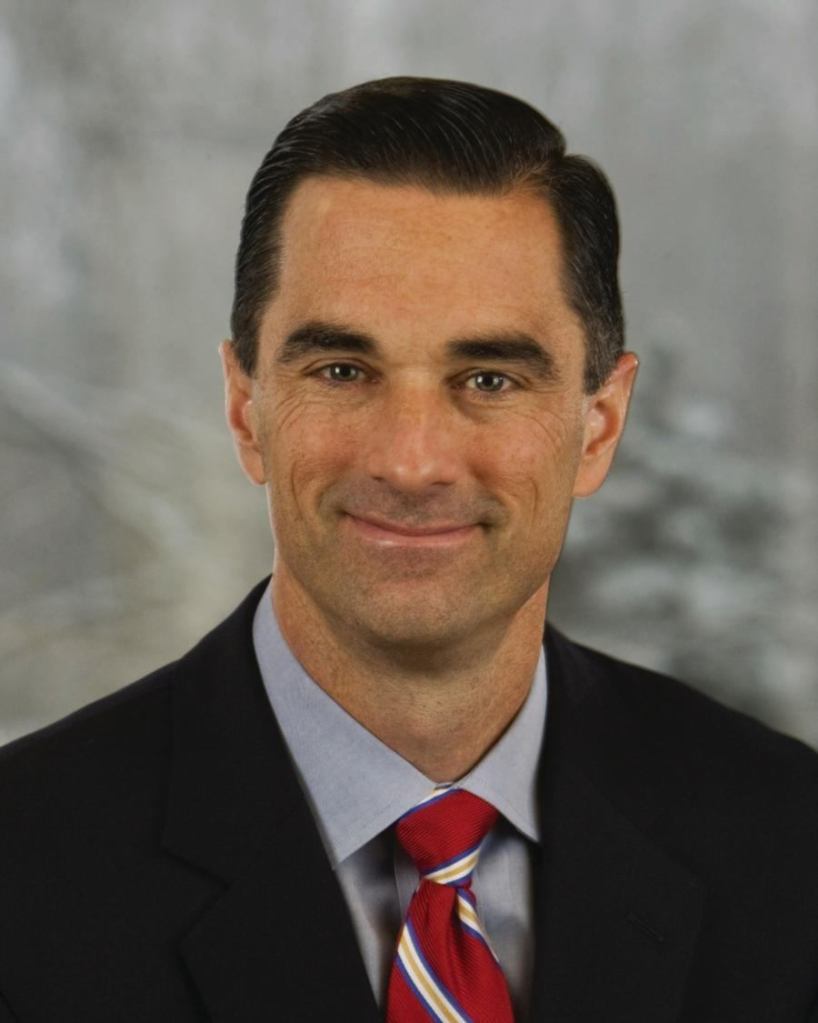
Richard Dugas

Pulte Homes

Pulte Homes' closings were down 24% in 2008, less than most of its competitors but sales slipped at year's end, portending low closing numbers for the first part of 2009.

In January of 2008, Pulte CEO Richard Dugas told analysts that the previous year “will likely be remembered as the most diffi cult in decades.” In January 2009, Dugas had to beef up his language. An “incredible calamity,” was how he described the last quarter of 2008.

Despite the challenges, Pulte’s closings fell only 24 percent in 2008, far less than the average for the large public builder group , and the company leapfrogged from No. 4 to No. 2 in the top 10 Builder 100 companies. Pulte also amassed a war chest of $1.7 billion by year’s end.

The cash will be helpful as the company’s sales are expected to decline even more during the fi rst part of 2009. At the end of 2008, Pulte had a backlog of 2,174 homes under contract, a 72 percent decrease from the end of 2007.

After an initial purging of some of the company’s less-thanstellar land positions, Dugas, unlike many other CEOs of public home building companies, held tight to the land the company had left, despite criticism from analysts. He insisted it would be diffi cult and expensive to replace when the market returns.

Pulte plans to work through its land the old-fashioned way, he says, by building houses on it and selling them.

Says Dugas, “Pulte is built for the long term.”

Steve Parker

Mattamy U.S. Group

Canada's largest builder, Mattamy Homes, plans to take advantage of the economic downturn by buying lower cost land to gain market share and expand into new U.S. markets.

Mattamy Homes’ performance has been no better or worse than any other builder caught up in the market downturn, says Steve Parker, the company’s U.S. president.

“I imagine, quite honestly, our performance has been similar to every other builder,” he says. “We fought and were challenged with the same issues.”

But the company has a few advantages over the typical builder. It’s short on land, two to three years’ worth at current sales rates, leaving it relatively unburdened by devalued assets. And it’s owned by the biggest builder in Canada, which Parker says has the wherewithal and the desire to take advantage of lower land prices to expand its U.S. brand.

Mattamy moved into the U.S. market in 2004, buying operations and land in Minneapolis, Jacksonville, Fla., and Charlotte, N.C. In 2006, it opened a small operation in Phoenix. But its expansion plans slowed as the market fell. Early this year, Mattamy announced it was moving into the Orlando, Fla., market where it had set up its U.S. headquarters, acquiring several parcels at what Parker says are reasonable terms.

“We plan to increase market share, then we will continue to expand into large cities that are close or adjacent to our organizations,” Parker adds.

Credit: Chris Cone

Robert Hawksley

Fischer Homes

Fischer Homes gains market share in Ohio even as large production builders abandon the state.

Even as Fischer Homes’ closings declined in 2008 to around half its 2006 pace, the Kentucky-based builder made bold moves to gain market share by scooping up land being dumped by fleeing large public builders.

The company moved into the Columbus, Ohio, market by buying the assets of Beazer Homes USA and Centex Homes. At the same time, it also gathered market share in Cincinnati and Dayton, Ohio, as other builders folded.

President and COO Bob Hawksley thinks these moves will allow Fischer, which sells to customers in all price points from entry level to active adult, to increase sales this year even as other builders log fewer. “The market has declined, and we are picking up,” he says.

The company is in a position to buy low because it is financially conservative, and “we really did not participate in the run-up when people were buying tons of land” at high prices, he says. “We probably did a couple of deals we wish we hadn’t done,” he says. But, he adds, that’s better than regretting half the deals they made.

Hawksley does think Fischer was about six months too slow with staff reductions to meet the falling sales. “We thought it would start back up quicker than it did.”

Jeffery D. Gow

Polygon Northwest Co.

Polygon Northwest stopped buying land in 2004 helping to position it to weather the downturn.

The housing slowdown took a while to get to the Pacific Northwest but by the time it arrived in the Seattle and Portland, Ore., markets, Polygon Northwest was ready.

“We had a pretty good idea that this wasn’t going to end in a happy way, so we began planning for this in 2004,” says CEO Jeffery D. Gow. “We stopped buying land and became more careful with starts.”

That move put the company in a better position to weather its decline in closings from 849 in 2007 to 492 this year. The company is also building 450 market-rate apartments this year. Gow estimates that Polygon will close 600 homes in 2009.

Just by surviving, the company is gaining market share. “We have less competition today than we did three years ago, so a lot of our volume is coming via increased market share,” he says.

During the downturn, Gow says the company focused on the same basics it has from the beginning: increasing quality and customer satisfaction with the goal of capturing repeat business and referrals. Now, 50 percent of its sales are referrals.

“It’s something that all of our staff has worked very hard on for a very long period of time, and it has paid dividends for us,” says Gow.

Stephen E. Olson

The Olson Co.

The Olson Co. is in the right place for a California developer--builiding in urban locations near transit hubs. Now the company is working to get its homes priced to sell in the new economy.

There isn’t much that’s good about being a home builder in California these days. But if that happens to be your lot, the best kind to be would be an urban infill specialist that builds next to transit stops the way The Olson Co. does.

“The good news is, we’re selling,” says Stephen E. Olson, the company’s chairman and CEO. “The bad news is that the foreclosures have happened in the urban market as well, so we have been price affected.”

Like everyone else, Olson is focused on generating cash, reducing debt, and cutting the size of his company by 50 percent from peak. At the same time, he is reworking home plans to lower costs, so the houses he does sell at the new lower prices will produce a profit.

“I think we’re in a period when people cannot pay for what I would call frills,” says Olson. “They can pay for shelter, though, and I think it’s going to be that way for some period of time.”

In the meantime, Olson, who forged good relationships with local governments while in the process of redeveloping urban locations, tapped into those connections to keep his company busy. He’s found work constructing housing for both universities and municipalities.