“Affordable housing is good for the community,good for the city,and good for us,” says David Weekley, chairman of David Weekley Homes, about his company being named to build the affordable housing component for the first phase of the Mueller redevelopment project near the old airport in Austin, Texas.

“It's not just a successful business [practice],” Weekley says. “It's the right thing to do, as well.”

Weekley was best-known during the boom years as a builder of second-time move-up homes. Why has the company shifted gears so dramatically?

One answer is the proactive way the city of Austin went about wooing builders. Fees were reduced and building permits expedited. Another big motivator is that David Weekley Homes can also build roughly as many market-rate homes as affordable homes in the project's first phase, 90 market-rate and 71 affordable.

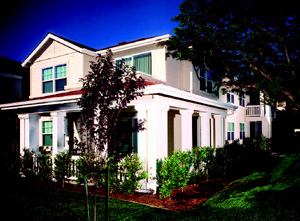
NEW TRICKS: The apartments for teachers at Casa del Maestro in Santa Clara County, Calif., were  built by Thompson Dorfman Partners, a Sausalito developer best known  for its luxury units.

NEW TRICKS: The apartments for teachers at Casa del Maestro in Santa Clara County, Calif., were built by Thompson Dorfman Partners, a Sausalito developer best known for its luxury units.

The builder is on the bleeding edge of what could well be an industry trend. A Builder survey conducted for this feature finds that while only 13 percent of builders queried participate in inclusionary zoning programs (mandated set asides), a full 66 percent said it would be “somewhat likely” or “extremely likely” that their companies would participate in an affordable housing project if the municipality had an innovative program that included incentives such as tax credits and streamlined permitting.

“Builders recognize that there's a huge market for affordable housing,” Weekley says. “The challenge is how to reach that market.”

Weekley says his company identified the affordable market as underserved in Weekley's seven-state trade area in the Southeast and Southwest about five or six years ago. It then came out with its Imagination Home series, a product that sells from the low $100,000s.

The Imagination homes are between 1,400 to 1,800 square feet, and usual standard items such as fireplaces and entertainment centers are offered as options. They also have standard-sized windows and uniform ceiling heights, which let the builder save money on framing materials. Weekley says the Imagination homes now account for about 35 percent of the builder's total sales.

“I credit the company's expertise in building an affordable product as a major factor in being named for the Mueller project,” he says.

OTHER PARTNERSHIPS

The Mueller project is without question a pacesetting project, but there are other instances where builders are teaming up with local officials. One such partnership has teamed the city of Tallahassee, Fla., with K2 Urban Corp., which is building Evening Rose, a 138-unit traditional neighborhood development (TND). Twenty of the units will be affordable homes.

David Wamsley, K2's CEO, says the city has waived fees, expedited permits, and created a TND code so the city's regulations would permit features such as rear alleys and narrower streets. The city also agreed to pick up the lion's share of road improvements near the site because it wanted to see more affordable housing built. Homeowners moved into the first few market-rate units that became available this spring, and Wamsley says the affordable units will be ready by year's end.

“If you look at the more sophisticated master planned communities in larger markets, you won't find one that doesn't have an affordable component,” says Wamsley.

The Tallahassee project has grown in importance because, while K2 opted to partner with the city to build affordable units, the Florida HBA is challenging the constitutionality of Tallahassee's mandatory inclusionary zoning law. The city's law says that at least 10 percent of new homes in a development with 50 or more single-family or multifamily homes must be sold for $200,000 or less. The builder trade group is concerned that if Tallahassee's ordinance stands up in court, several other communities across the state will pass similar laws.

The Florida HBA supports voluntary affordable housing projects with financial incentives and density bonuses, most notably the Community Work-force Housing Innovation Pilot (CWHIP) program. The Florida legislature funded it with $50 million last year, which was seed money for 11 projects statewide. One of the projects, The Preserve, a 122-unit multifamily rental development in the city of St. Cloud, is a great example of how affordable projects require intricate partnerships.

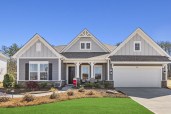
HOPE SPRINGS ETERNAL: The Hope VI project Park DuValle in Louisville, Ky., offers a welcome alternative  to the high-priced condos that were built downtown in recent years.

HOPE SPRINGS ETERNAL: The Hope VI project Park DuValle in Louisville, Ky., offers a welcome alternative to the high-priced condos that were built downtown in recent years.

“You can't solve the affordable housing problem with just one piece of financing,” says Jonathan Wolf, president of the Wendover Group in Heathrow, Fla., the developer on the project. “You have to piece together multiple elements.”

The package for The Preserve included the following: a $5 million CWHIP grant from the state; $1.9 million in grants and impact-fee waivers from Osceola County and the local school board; a $9 million construction loan from Florida Community Partners, a local consortium that funds affordable housing projects; and a tax credit to the seller for donating a portion of the land, which helped keep land costs down.

Rentals are $800 a month for a two-bedroom apartment and $1,000 for a three-bedroom apartment. The units are for essential service workers such as police, fire fighters, teachers, and retail workers. Some of these workers earn well above 100 percent of the area media income, but, Wolf says, that's part of the point.

“What's happened is that many of these workers earn more than the normal tax credit will allow to build affordable housing, but less than what is affordable in the local market,” Wolf explains, adding that the politicians finally recognized something different had to be done to deliver housing for essential service workers.

THERE'S STILL HOPE

Federal programs providing affordable housing assistance, such as Hope VI, have been cut back from in excess of $570 million annually in the early 2000s to about $100 million.

However, some Hope VI projects are still producing results. The Louisville (Ky.) Metro Housing Authority used two Hope VI grants and a city grant to raise $230 million for Liberty Green, a mixed-income, mixed-use project that features 430 rental apartments and 220 for-sale townhomes. The rental units will service families in the 30 percent to 80 percent AMI (area median income) range, while the for-sale homes will target families that exceed 80 percent AMI. The developer is Boston-based The Community Builders, which has managed numerous Hope VI projects around the country. Construction started this past spring.

And then there are projects that are much smaller in scale and aren't necessarily profitable for the builder, but offer other rewards. About five years ago, the Santa Clara (Calif.) Unified School District built 40 rental units for school teachers in the Silicon Valley area by taking over two acres of school-owned property and issuing revenue bonds. Rents at Casa del Maestro, or House of the Teacher, are kept affordable since the school district's main goal is to cover its costs and pay back the notes it issued to fund the initial construction. The developer, Thompson Dorfman Partners of Sausalito, Calif., best known for its luxury units, plans to build another 30 apartments in the next year.

“When we presented this concept years ago it was the first time I can ever remember receiving an ovation from a publicly elected board,” says company president Bruce Dorfman, adding that Thompson Dorfman basically covered its overhead on the job but did the project because it had built 3,000 units in the district over the past decade and wanted to give something back to the community. A project like this is clearly an excellent public relations move and endears the company to city officials, says Dorfman.

HIGH PROFILE

The 711-acre Mueller project is very high profile in Austin. The old airport is two miles from the University of Texas and three miles from downtown, so there's lots of interest in building affordable housing there. Along with David Weekley Homes, five other builders were selected for the project: Meritage Homes, Standard Pacific Homes, and three local builders, Saldana Homes, Streetman Homes, and The Muskin Co.

The first phase of the Mueller project calls for 348 for-sale units. David Weekley Homes will build all 71 of the affordable units in addition to 90 market-rate homes. The affordable homes include row houses and single-family homes sized from about 1,200 to 1,400 square feet, with prices ranging from $120,000 to about $160,000. These homes are targeted at families who earn 80 percent or less of the area's median income.

Paul Hilgers, director of Austin's department of neighborhood housing and community development, says although inclusionary zoning is not allowed in Texas, the city of Austin was able to specify that 25 percent of the units for Mueller be affordable because the city sold the land to Catellus Development Group, a business unit of Denver-based ProLogis, the project's main developer. According to Hilgers, the city can specify an affordable component when a large tract of city land is sold to a developer.

“What we did was provide some cost benefit to the developer and created a process that defined the public benefits we were looking for right from the beginning,” says Hilgers. “Aproject will never work if you go in and tell the builders and developers ‘you have to do it this way.'”

Project name: Mueller; Location: Austin, Texas; Developer: Catellus Development Group, business unit of ProLogis, Denver; Builders: David Weekley Homes, Houston; Meritage Homes, Scottsdale, Ariz.; Standard Pacific Homes, Irvine, Calif.; Saldana Homes, Austin, Texas; Streetman Homes, Austin; and The Muskin Co., Austin; Project size: 4,600 units total—2,400 rental, 2,200 single-family (25 percent affordable); first phase 348 units, 71 will be affordable single-family; Price range: $120,000 to $160,000; Square footage: 1,200 to 1,400 square feet; Area median income: $69,300; Median home price: $177,080; Construction cost: $1 billion (estimate) courtesy thompson dorfman partners

BLEND IN

Affordable housing used to conjure up images of poorly constructed housing that stuck out like a sore thumb in an otherwise desirable subdivision. One unifying feature of mixed-use and mixed-income developments is that the builders work very closely with the municipalities to blend in the affordable housing with the market-rate units. They also vie to keep the construction quality high.

“The last thing we want to do is stigmatize people and put them in old-style barracks-type housing,” says Tim Barry, executive director of the Louisville Metro Housing Authority.

John McIlwain, a senior resident fellow at the Urban Land Institute, says it's unrealistic to expect that the free market alone will deliver the kind of affordable housing Barry describes.

“Housing is one of the most constricted, heavily regulated markets in the U.S. economy,” he says, which means builders have to strike a balance between local governments advocating for affordable housing and the company's need to make money.

McIlwain says builders can agree to build a higher percentage of affordable housing on a project if the municipality does one or more of the following: reduces impact fees, speeds up permits, reduces parking requirements, or abates real estate taxes for new-home buyers.

Hammering out such deals is more important than ever as the industry works through the downturn. Most municipalities want and need a vibrant building market that can deliver its share of affordable housing. Builders tend to feel government makes their work more difficult, but city hall may be ready to negotiate this year to help get the market moving again and meet local affordable housing goals.

CALIFORNIA DREAM

A school district's rental unit proves to be the path to homeownership for a California teacher.

Some people have all the luck and Katherine Nissen, 30, a teacher who manages the support program for elementary school teachers in the Santa Clara, Calif., Unified School District, has had more than her share.

Nissen's first break came about six years ago when she won a lottery to be among the first group to reside in Casa del Maestro, or House of the Teacher, a 40-unit apartment complex set aside for the district's teachers. The units were built by Thompson Dorfman Partners, which plans to build another 30 apartments to meet demand in the next year.

“This is such a nice thing to do for teachers,” Nissen says. “The cost of living is so high in Silicon Valley, and it's especially tough for teachers because most of us aren't making that much money in the first place,” she adds.

The school district dedicated two acres of school-owned property for the project. The district purchased $6 million of certificates of participation notes—similar to revenue bonds—and pays the note back with the rents from the teachers. The rents are kept well below market rate—the district uses them mainly to cover its costs and pay back the notes.

Teachers are allowed to live in the apartments for five years. Nissen lived in the complex with a roommate only one year and says the $700 a month rent allowed her to save roughly $500 a month. The $6,000 she saved, plus money saved by her husband, Carlos, and a homeownership subsidy of $500 a month for five years that Intel offers teachers struggling to afford a home in pricey Silicon Valley amounted to enough to purchase a new $440,000 townhome. Home buyers who use the Intel money have to pay back the $30,000 subsidy after five years, and Nissen says she will probably pay the money back with a home equity line.

The house is in Rivermark, a master planned community built by Centex, Lennar, and Shea Homes, located about five minutes from Nissen's work. The best part: Nissen's townhome is now worth in excess of $700,000, which gives Nissen and her husband financial flexibility they never thought possible.

COMMUNITY COMMITMENT

One Louisville, Ky., woman chose to be part of a neighborhood turnaround—and bought an affordable home in the deal.

Five years ago, the neighborhood where Pam Osborne now lives in a Hope VI project in Louisville, Ky., was one of the most dangerous in the city. “This area had a bad time with murders, crime, and drugs,” says Osborne, 54, director of admissions at the University of Louisville's Medical School.

“Now, friends who lived in the neighborhood previously and come back to visit don't even recognize it,” she says of the Park DuValle project where she has lived for the past three years in a new 1,250-square-foot home. The house cost $124,000 and was sold to her as a market-rate unit with no restriction on how much money she can make on the home if she sells it.

Park DuValle was built with $200 million in public and private funds. What used to be a model for urban decay, with 1,300 dilapidated public housing units, has been transformed into a mixed-income project with 1,023 units on 130 acres.

The community consists of 410 single-family homes, some of which are affordable to families earning around 80 percent of the AMI, but the majority of the homes are for those earning in excess of 100 percent AMI. The 613 rental units are broken into tiers with one-third for 30 percent AMI; one-third for 80 percent AMI or below; and the final one-third is market rate.

“I had a hard time finding a neighborhood that offers the amenities I was looking for at a price I could afford,” says Osborne, who earns about $50,000 annually.

Osborne also wanted to be a part of turning the community around. “I remember the neighborhood when it was a family-friendly place,” she says. “I want to be a part ... of bringing it back,” she explains.