The pricing on any housing project starts with the land, but it's especially important for a builder who wants to create affordable housing. Creativity and the ability to look at a piece of property and see its potential for housing is key, says Henry Cisneros, former HUD secretary and current chairman of Santa Monica, Calif.–based CityView, which provides financing, entitlement and marketing assistance, community outreach, and other help to work-force housing builders.
“There are lots of different ways to acquire land,” Cisneros says. “The key is to develop the eye to see in sites what they might be instead of what they are. You could drive by a piece of ground every day and never think about it for housing because it's a truck yard or mini-storage or an abandoned factory.”
It's a skill that Fernando Pages has perfected. The Lincoln, Neb.–based owner of Brighton Construction, who exclusively builds affordable housing, has basically never met a piece of ground he couldn't adapt for an affordable housing neighborhood. The most challenging sites are often the most affordable, so Pages has built a virtual encyclopedia of construction processes to match lot conditions. Maybe the topography is problematic, such as a site being in a flood plain, or there is a feature that makes it undesirable, such as an odd-shaped, infill lot. “Those lots sit empty for years upon years,” he says.
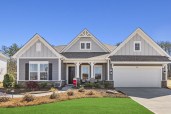
![LABOR OF LOVE: Larry Webb, John Laing Homes' CEO, says The Boulevard demonstrates his belief that workforce housing shouldn't compromise architecturally. “I don't want you to drive by a neighborhood and say, ‘That's where the poor people live,'” Webb says. “The people who live [at The Boulevard] really got high-quality homes. ... I love this stuff.”](/Images/BD070701108L2_tcm10-17297.jpg)
LABOR OF LOVE: Larry Webb, John Laing Homes' CEO, says The Boulevard demonstrates his belief that workforce housing shouldn't compromise architecturally. “I don't want you to drive by a neighborhood and say, ‘That's where the poor people live,'” Webb says. “The people who live [at The Boulevard] really got high-quality homes. ... I love this stuff.”
The solution may be as simple as building for the right buyer. Take land zoned residential on a major street with heavy traffic, for example. He's built neighborhoods on high-traffic locations in several cities, tailoring the communities to buyers who consider living on a main drag an amenity.
“I build for a different community than ‘location, location, location' white Anglos,” says Pages. “In a lot of parts of the world, living on the main street is a status symbol.”
Pages isn't the only builder who sees a tremendous potential market in affordable housing. Larry Webb, CEO of Newport Beach, Calif.–based John Laing Homes, says he thinks the demand is “immense,” but doesn't believe that most national builders are set up to recognize and maximize the opportunities. Among the challenges are the complexity of the sites that typically work for affordable housing projects, which often require environmental cleanup, and the difficulty in convincing local governments to reduce land costs on publicly owned sites or waive development fees. In his area, Webb says, “It's a lot easier to buy 100 lots from The Irvine Co. [and build market-rate homes].”
FORGING ALLIANCESTo get the best deals on land to build affordable housing, builders generally have to work cooperatively with the public or nonprofit sector. Pages, who is the author of Building the Affordable House, is a virtuoso at the game of getting land for next to nothing—or nothing at all. Local governments and foundations own lots of surplus land; tax-delinquent properties and bankruptcies are other possible sources.
Willing nonprofit partners aren't hard to find. Affordable housing developers, such as the Enterprise Community Foundation and BRIDGE Housing in California, regularly work with for-profit builders when they acquire parcels. Local nonprofits, such as land trusts and community development agencies, almost always hire builders to meet their affordable housing missions.
“Once you say you want to build true affordable housing and accept AMI [area median income] restrictions, there are a tremendous number of charitable organizations that play in that space,” says Joel Shine, president of CityView.
The key to getting land for cheap or free from public or private nonprofit owners is to figure out how using the parcel for affordable housing will meet a need the owner has to address, whether it's economic development, improving the health of children, or eliminating urban blight.
“Builders often hesitate to get involved in this because it seems like work,” Pages says. “If you can deliver a project to a mayor who needs a legacy project, you suddenly have this very powerful political backing that will get you free or highly discounted land. I'll spend two years working on a project, but the subsidies will be worth $700,000. Is that worth two years' work? Yeah.”
DEVELOPMENT COSTSPurchasing raw land and doing your own development can make a major difference in controlling land costs. The Los Alamos Housing Partnership in Los Alamos, N.M., paid market value—$1.4 million—for land owned by the local school district for the development of Piñon Trails, a mixed-income community that would include affordable housing for school employees. (Under a state law in force at the time, the district couldn't sell its land at a discount; that law has since been repealed, allowing governmental agencies to donate or discount land to be used for affordable housing.) The agency bought the infill parcel as raw land and did its own infrastructure. “Entitlements weren't cumbersome. It was an infill site, so there were utilities all the way around,” Los Alamos Housing Partnership director Steve Brugger says. Total development costs for each of the 120 lots ran about $36,500, roughly half the appraised value.
Santa Fe, N.M., builder Bruce Thompson was hired to build the affordable units. He also had first right of refusal for a takedown schedule on the market-rate lots. It's kept him busy since 2003, even as the housing market softened. He's been happy enough with the process to do it again on another group of 60 affordable homes.
“I came up with a figure that would give me a reasonable profit and overhead,” he says. “My caveat in giving the price is that I needed to get a certain number of starts.”
Builders in major housing markets and small communities alike are using these strategies and more to obtain low-cost land and strategic financing to purchase market-rate lots. They're also exploring partnerships with nonprofits that retain ownership of the ground, such as community land trusts, or develop the neighborhood, such as Habitat for Humanity's Corazon del Pueblo in Tucson. The Habitat affiliate developed the 393-unit neighborhood, selling off lots to four local builders and making enough from that venture to provide the affiliate with a four-year supply of lots. “This has been fun to do,” says Michael McDonald, executive director of Habitat for Humanity—Tucson. “We really believe in this model for neighborhood revitalization.”

MULTIPLE GOALS: Liberty Village in Lincoln, Neb., meets a host of public policy objectives, including affordable housing, green building, economic revitalization, energy-efficiency, flood plain management, and even refugee resettlement. The homes are designed to adapt to cultural preferences that fit the local market.
CLOSE TO HOMEAn affordable townhome keeps a family near loved ones.
When Jose and Erika Reyes were looking for a home in Anaheim, Calif., in 2005, the median price of an existing, single-family house was $691,900—not exactly in the price range of a city employee and an office assistant for the school district. They were renting a house from Jose's younger sister for $1,600 a month —and that was a bargain. “If she'd rented it to someone else [who wasn't family], she would have asked for $2,000,” Erika says.
To find anything below $500,000 required either settling for “an old, old house that needed a lot of work,” Erika says, or moving out of the county, which would increase their commutes to an hour or more each way. Then they heard about The Boulevard, a community for residents earning 80 percent to 100 percent of the area median income, from Erika's sister-in-law, who also works for the city.
Their three-bedroom, 2 ½-bath townhouse at The Boulevard has 1,790 square feet on three levels, with an attached, two-car garage. It's an end unit, so they only have neighbors on one side, which Erika likes. It's just a few minutes from downtown Anaheim, the mall, two major freeways—and Disneyland. “We can hear the fireworks every night,” she says.
It's also close to their two sons' schools and to family, who help with babysitting the boys, who are 12 and 9. Erika's mom takes the older boy to baseball practice, and Erika meets them at the ball field after work. “If we'd moved out of Anaheim, I would have had to tell him, ‘Sorry, son, you can't play sports.'”
The opportunity didn't come a moment too soon. During construction, their rental house was sold and the entire family shared one bedroom in Erika's sister's house for a month. They moved into their new home on New Year's Eve of 2005. “Everyone was out partying; we were moving,” she says. “We got an air mattress and put it in the living room because we didn't have any furniture. We didn't care.”
PORCH-SWING DREAMSA broad range of affordability tools make homeownership possible for a government worker.
Larry Roos had a special description for the traffic noise he heard constantly at the duplex where he rented before he bought a house in Liberty Village in Lincoln, Neb.
“I would tell people it felt like someone was driving in my dreams,” he says. Now, he loves sitting on his porch in a swing he inherited from his great aunt. He says it reminds him of the times they swung on it together when he was a child.
A placement specialist for a state agency that serves the visually impaired, Roos says the houses in his price range of under $100,000 tended to be older, smaller, and in need of extensive repairs or remodeling. He heard about Liberty Village in a home buying class he took through NeighborWorks Lincoln, a nonprofit agency that helps first-time home buyers by providing education and financing. The 20-home community in the Antelope Valley redevelopment area was designed as affordable, energy-efficient housing for a diverse group of buyers. Roos' neighbors include refugees from several countries and Hurricane Katrina evacuees. Subsidized land costs and value engineering kept the home prices low to begin with. Down-payment assistance and interest rates as low as 2.9 percent made it even more affordable.

His three-bedroom, 2 ½-bath, 1,400-square-foot home has an unfinished basement and an attached, two-car garage and is twice the size of his former rental. He likes the fact that the yard has a sprinkler system and that the HOA pays for snow removal. Plus, since the houses are only 8 feet apart, there's little lawn maintenance. “I don't have much of a green thumb,” he says.
He also appreciates all the energy-efficient features that were included in his house, which saves him a substantial amount of money on utility bills each month. That's important because he's spending about $200 more a month on his housing now than he was as a renter. But he knows this is an expense with a long-term payoff.
“Being in my mid-40s, it's a sound investment,” he says.
Community: Liberty Village; Location: Lincoln, Neb.; Builder: Brighton Construction, Lincoln; Project size: 16 detached single-family homes and four townhomes on one acre; Land cost: $11,000 per lot; Construction costs: $68 per square foot; Project financing: Local, state, federal, and private nonprofit loans and grants and bank construction loans; Price range: $114,500 to $127,500; Square footage: 1,400 to 1,500 square feet; Area median income: $60,871*; Median existing-home price: $137,700**
*SOURCE: 2005 U.S. CENSUS BUREAU ANNUAL HOUSING SURVEY
**SOURCE: NATIONAL ASSOCIATION OF REALTORS
AFFORDABLE FOR GENERATIONSThe Pflieger family owns their home, but not the land.
Raising three daughters on a Lutheran school principal's salary, Charlie and Josie Pflieger of Albuquerque, N.M., thought they'd be renters for years to come. “On that kind of income, we weren't really able to afford a home,” Josie says.
Still, they signed up for the city's first-time home buyer program. There, they heard about Sawmill Community Land Trust. The Pfliegers were the first family to close in Arbolera de Vida, which was designed as a mixed-use, master planned community with affordable for-sale and rental housing.
Their two-story, 1,700-square-foot, green-built house has four bedrooms and a two-car garage. “It's pretty charming,” Josie says. They are a block from a children's museum and a five-minute drive from their daughters' schools.
They own the house, which they bought for $130,000 seven years ago, but not the lot. Instead they have a 99-year lease from the land trust. If they sell the house, they'll share the equity with Sawmill. Their mortgage payment is $700 a month, less than half what the Pfliegers say they would pay to rent, much less buy, a comparable house in Albuquerque.

ON TRACK: These railroad tracks once ran through the middle of a 27-acre industrial tract redeveloped by the Sawmill Community Land Trust in Albuquerque, N.M. Relocating the tracks paved the way for Charlie and Josie Pflieger and their three girls to move into Arbolera de Vida, a mixed-use community of affordable and market-rate homes.
With some assistance from the first-time home buyer program, they probably could have bought a bigger house on the west side of Albuquerque, Josie notes, but it wouldn't have been as well-built and the neighborhood wouldn't have been as safe. “Some teachers that teach with my husband live on the west side—that's where they've been able to afford houses. Sometimes they feel like they're in a war zone. That gets kind of scary. That's one of the reasons I love it here. I feel safe.”
The fact that her family doesn't own the land her house sits on simply isn't an issue for Josie. Now a board member of the land trust, she understands the importance of keeping the community affordable for years to come.
“We wanted to belong to a neighborhood that cared about people,” she says. “[Owning the land] didn't really matter to us.”
Community: Arbolera de Vida; Location: Albuquerque, N.M.; Developer: Sawmill Community Land Trust, Albuquerque; Builders: Chris Vigil Construction (phase I), Mock Associates (phase II), both of Albuquerque; Project size: 57 single-family homes, 23 townhomes, 10 casitas, and 60 live/work rental lofts on 27 acres; Land cost: Ownership of land retained by Sawmill Community Land Trust; Construction costs: $90 to $100 per square foot; Project financing: Private bank funding for home construction; local, state, and federal funds for infrastructure; Price range: $111,000 to $167,000; Square footage: 1,000 to 1,506 square feet; Area median income: $53,200*; Median home price: $211,000*
*SOURCE: NAHB/WELLS FARGO HOUSING OPPORTUNITY INDEX, 4TH QUARTER 2006